Rainy-Day Indoor Game Night Checklist for Kids (AI Ideas)
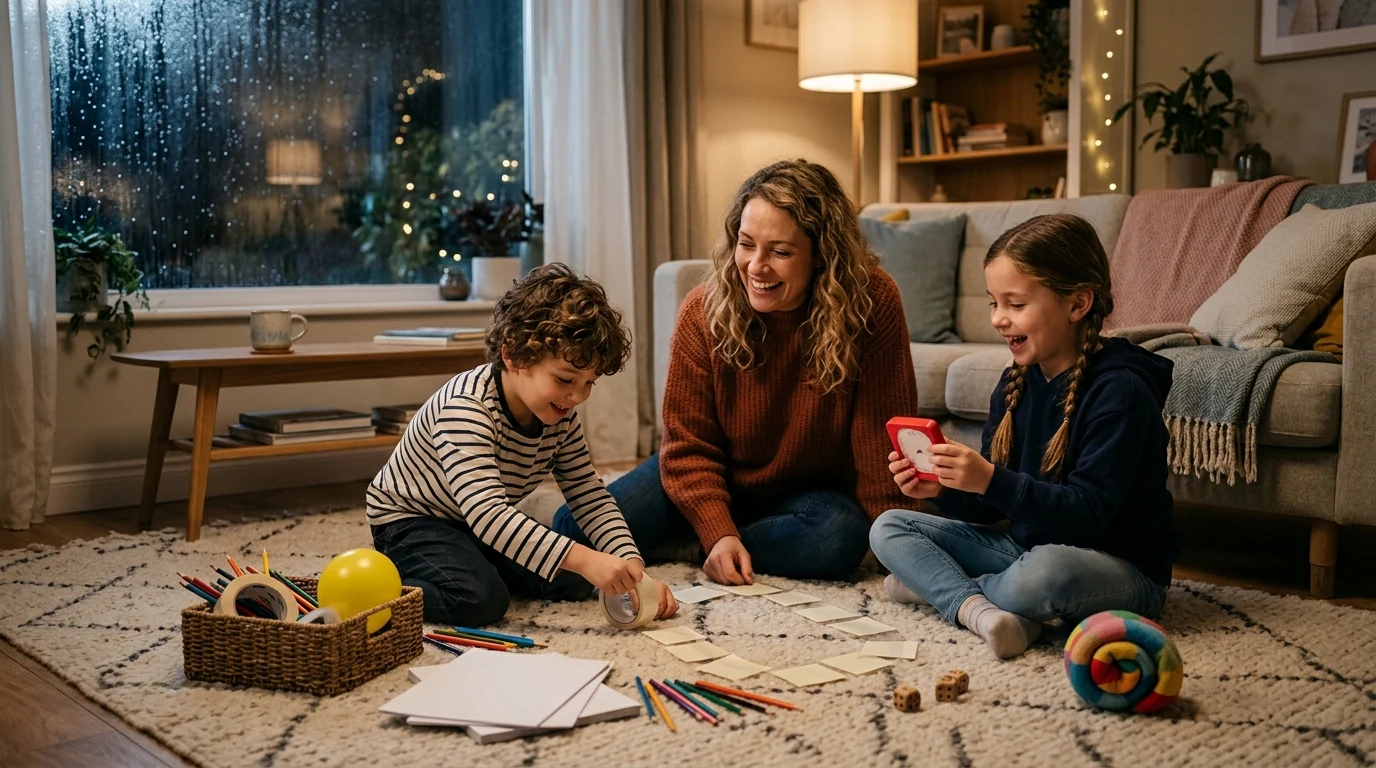
Rainy-Day Game Night Made Easy: An AI-Powered Indoor Games Checklist for Kids
Indoor days can turn chaotic fast—especially when kids need to move, create, and laugh without tearing the house apart. A reliable game-night routine helps everyone know what’s coming next, reduces “What do we do now?” debates, and keeps the fun contained. Below is a flexible plan you can repeat all season, plus copy-and-use idea starters, a printable-style checklist, and simple tweaks for different ages and energy levels. For more guidance, see Top 20 Indoor Activities to Get Kids Up and Moving.
What makes an indoor game a guaranteed win
The best indoor games aren’t the fanciest—they’re the easiest to start and the easiest to finish. If you want a “works on a rainy Tuesday” kind of game, look for these traits: For further reading, see 61 simple and engaging indoor activities for toddlers and ….
- Fast setup (under 5 minutes) using common household items (paper, tape, a balloon, a sock ball).
- Clear goal and a simple end point (first to 10 points, beat the timer, find 12 items) so it doesn’t drag on.
- Adjustable difficulty so multiple ages can play in the same room without boredom or frustration.
- Built-in movement option (a quiet version and an active version) to match your space and noise limits.
- A “reset button” rule for fairness: replay once, swap roles, or change one constraint (distance, time, or number of tries).
For play ideas that support social skills and emotional development, resources like HealthyChildren.org (from the American Academy of Pediatrics) are a helpful reference point.
A simple game-night flow that reduces decision fatigue
When kids are restless, decision fatigue hits adults too. A repeatable flow prevents the evening from turning into endless negotiation.
- Pick a time box (30, 45, or 60 minutes) and commit to 3 rounds.
- Alternate energy levels (active → calm → creative) to help prevent meltdowns at the halfway point.
- Assign roles to increase buy-in: timekeeper, scorekeeper, supply helper, “rule reader.”
- End with a highlight recap: each person shares one favorite moment (keeps the ending positive and predictable).
Optional bonus challenge: add cooperative points for a team clean-up race, kindness points (helping, encouraging), or creativity points (silliest voice, best costume, funniest sound effect).
If you’re balancing screens during indoor days, the American Academy of Pediatrics guidance on media and children can help you set boundaries that feel realistic for your household.
Game categories to rotate (so it feels new every time)
Rotation is the secret to novelty. Keep five categories in your back pocket and swap just one round when things start feeling stale.
Go-to categories
- Movement games: obstacle paths, freeze challenges, balloon keep-up, silent dance.
- Thinking games: riddles, scavenger clues, memory trays, logic mini-missions.
- Creative games: story building, drawing relay, costume charades, music-and-sound challenges.
- Co-op games: family quests, group puzzles, “beat the clock” tasks, kindness bingo.
- Quiet reset games: breathing dice, stretch-and-copy, whisper telephone, mini yoga poses.
Choose a round based on time, energy, and mess level
| Round Type | Best For | Time Needed | Mess Risk |
|---|---|---|---|
| Active | Wiggles and laughter | 5–15 min | Low–Medium |
| Calm | Transitioning to quiet | 5–10 min | Low |
| Creative | Making something together | 10–20 min | Medium |
| Thinking | Focus and problem-solving | 5–15 min | Low |
| Co-op | Siblings working as a team | 10–20 min | Low–Medium |
Copy-and-use AI idea starters (ready to personalize)
Use these as copy-and-paste idea starters in a chat tool. Include the child’s age, number of players, space limits, and noise limits so you get suggestions that actually fit your home.
- Idea starter: “Create 10 indoor games for kids ages [X–Y] using only paper, tape, and a ball. Include a 1-minute setup, rules, and a 5-minute version.”
- Idea starter: “Design a cooperative mission game for [number] players in a small living room. Add 3 difficulty levels and a calm-down round at the end.”
- Idea starter: “Invent a scavenger hunt with 12 clues that rely on shapes, colors, and textures (not reading). Include a parent answer key.”
- Idea starter: “Make a ‘no running’ game that still feels active. Provide variations for toddlers vs. older kids.”
- Idea starter: “Turn ‘charades’ into a theme night: animals, jobs, movie titles (kid-friendly), and household objects. Provide a list of 40.”
To keep family routines supportive and age-appropriate, you can also reference the CDC’s positive parenting tips by age.
Printable-style checklist to run the night smoothly
| Round | Game Type | Time Box | Supplies |
|---|---|---|---|
| 1 | Active | 10 min | Balloon, tape |
| 2 | Thinking | 10 min | Paper, pencil |
| 3 | Creative | 15 min | Markers, paper |
Age adjustments and sibling-friendly tweaks
Digital downloads that keep ideas organized
- AI-Powered Indoor Games Checklist for Kids (digital download)
- The Magic Behind AI Prompts | AI Prompt Patterns That Work (digital guide)
- Sleep Smarter with AI – Bedtime Routine Guide for Better Rest (digital download)
FAQ
How can indoor games stay fun without buying new toys?
Constraints create novelty: add a timer, switch themes, rotate roles, or play the same game with a new “rule twist” (silent round, one-hand round, backward round). Household basics like paper, tape, balloons, socks, and plastic cups can support dozens of repeatable games when you rotate categories and difficulty.
What if kids argue about rules or fairness?
Use a reset rule: “One replay or one role swap, then we move on.” Keep roles rotating (timekeeper, judge, scorekeeper) and choose games with clear endings, and try cooperative scoring where the group earns points together for finishing rounds and cleaning up.
How much screen time is needed for AI-assisted ideas?
It can be adult-only and brief: generate or select your three rounds in a couple minutes, then write them down or print the plan. Once the rounds are chosen, run game night screen-free and keep the device put away until the next planning session.











Leave a comment