Personalized AI Wind-Down Routines for Better Sleep
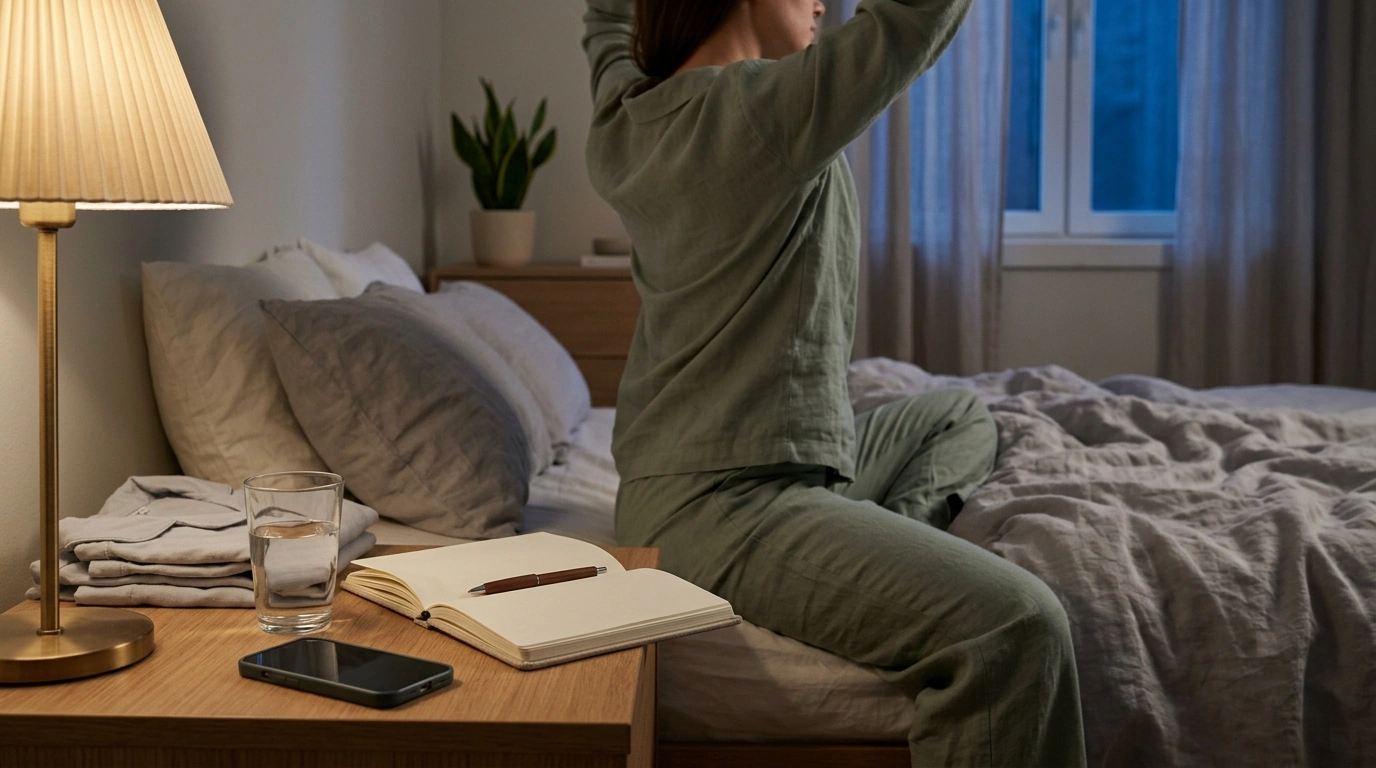
A Calmer Night, Powered by AI: Wind-Down Routines That Feel Personal
Evenings can carry leftover stress, scattered thoughts, and too much screen time. A well-designed wind-down routine can make the transition to sleep feel gentler—especially when AI helps tailor relaxation, mindfulness, and small habit shifts to real-life schedules, energy levels, and preferences. Instead of guessing what might help tonight, you can follow a simple sequence that fits the time you actually have and the way your body feels right now.
Good sleep habits still matter, of course. Basic sleep hygiene—consistent cues, a calmer environment, and fewer late-night stimulants—remains a strong foundation (see Sleep Hygiene Recommendations). The difference is that an AI-assisted approach can help you create a routine you’ll repeat, not just one you’ll read about.
What an AI-assisted wind-down actually changes
- Turns vague goals like “relax more” into a sequence of small steps that fit the time available (10, 20, or 45 minutes).
- Adapts to the day’s context: high-stress workday, social overload, late workout, travel, or low mood.
- Offers guided options without requiring endless app-hopping: breathing, body scans, journaling cues, light stretching, and bedtime boundaries.
- Reduces decision fatigue by providing a ready-to-run routine and a backup plan for nights when motivation is low.
That last point matters more than it sounds. When the brain is tired, it tends to default to whatever is easiest—scrolling, snacking, or “just one more” task. A pre-built routine removes the need to negotiate with yourself at 10:47 p.m.
A simple 30-minute night routine you can personalize
Use this as a dependable template, then swap pieces based on your preferences (quiet vs. audio, journaling vs. movement, structured vs. flexible).
Minute 0–5: “Close the day” ritual
Set your phone to Do Not Disturb, dim lights, and do a quick room reset (water by bed, tidy one surface, set tomorrow’s essentials). The goal is to reduce tiny stressors that reappear once you’re already in bed.
Minute 5–12: Downshift breathing
Try slow exhale-focused breathing (inhale gently, longer exhale) or box breathing. This helps signal safety to your nervous system and can ease the “wired but tired” feeling.
Minute 12–20: Gentle movement
Pick one: neck/shoulder release, legs-up-the-wall, or a short mobility flow. Keep it easy—this isn’t exercise; it’s a downshift.
Minute 20–28: Mindfulness or reflection
Choose a body scan, gratitude list, or a short “worry dump” journal. If you want a quick refresher on what mindfulness is (and what it isn’t), the APA’s mindfulness overview is a clear, practical reference.
Minute 28–30: Sleep cue
Wind-down options by time and energy
| Time available | Low energy | Restless energy | High stress |
|---|---|---|---|
| 10 minutes | 2-min breathing + 5-min body scan + lights out | 4-min stretch + 3-min breathing + 2-min journal | 5-min slow exhale breathing + 4-min worry dump |
| 20 minutes | 5-min breath + 10-min audio mindfulness + 3-min gratitude | 8-min mobility + 7-min body scan + 3-min tidy | 10-min guided relaxation + 7-min journaling + 2-min prep |
| 45 minutes | 10-min shower + 15-min mindfulness + 10-min reading | 20-min gentle yoga + 10-min breathwork + 10-min reflection | 15-min decompression walk + 15-min relaxation + 10-min planning |
How AI helps tailor relaxation and mindfulness to real life
If evening screen exposure is part of your challenge, it helps to separate “plan mode” from “wind-down mode.” Use AI earlier to generate your routine, then switch to low-stimulation steps. For background context on why bright screens can interfere with sleep, see Blue Light and Sleep.
Digital guide spotlight: AI Tool for Evening Wind-Down
AI Tool for Evening Wind-Down | Digital Guide to Relaxation, Mindfulness, and AI-Assisted Night Routines is designed as a digital guide to build relaxation and mindfulness routines that can change with the day, without turning your night into a complicated tracking project.
- Sleep Smarter with AI – Bedtime Routine Guide for Better Rest for turning bedtime into a consistent, repeatable sequence.
- The Magic Behind AI Prompts | AI Prompt Patterns That Work for clearer, more useful requests when you’re planning habits or reflecting on what’s working.
- AI Prompts for Fun Indoor Games for Kids for families who need earlier-evening activities that reduce bedtime resistance and overstimulation later.
Common evening obstacles—and practical fixes
Racing thoughts
Screen spirals
Late-night snacking
Inconsistent bedtime
Pairing ideas: build a full night routine system
| Goal | Add-on resource | Best time to use it |
|---|---|---|
| More consistent sleep | Sleep Smarter with AI – Bedtime Routine Guide for Better Rest | After dinner to set a predictable bedtime sequence |
| Clearer, more helpful AI outputs | The Magic Behind AI Prompts | AI Prompt Patterns That Work | Weekend setup or whenever routines start feeling stale |
| Smoother evenings with kids | AI Prompts for Fun Indoor Games for Kids | Early evening to reduce late-night chaos |
FAQ
Can an AI-assisted wind-down help with anxiety at night?
It can support calming routines like breathing, body scans, and journaling, and it can reduce decision fatigue when you’re already overwhelmed. If anxiety feels intense, frequent, or affects daily functioning, consider talking with a licensed mental health professional for personalized care.
How long should an evening wind-down routine be?
Most routines work well in the 10–45 minute range, but consistency matters more than duration. A “minimum viable” 10-minute routine is often the easiest to repeat on busy nights.
Will using AI at night increase screen time?
It doesn’t have to—use AI earlier to generate a simple plan, then switch to low-light, low-stimulation steps. Saving a short checklist and enabling Do Not Disturb can help you avoid getting pulled back into your phone.











Leave a comment