AI Sleep Checklist for Relaxation, Dream Recall & Lucid
AI-Powered Checklist for Better Sleep Adventures: A Digital Guide for Relaxation, Lucid Dreaming, and Better Dreams
A calmer bedtime can set the stage for deeper rest, vivid dreaming, and more consistent mornings. A “sleep adventure” approach blends practical sleep basics with optional, gentle dream exploration—so the foundation stays strong even when you’re curious about dream recall or lucid dreaming. The goal is simple: build a repeatable night routine that lowers pre-sleep stress, supports relaxation, and makes dream-focused habits feel doable (not demanding).
What “Sleep Adventures” Means (and Why Routine Still Matters)
Sleep adventures combine two ideas that work best together: reliable sleep habits (timing, light, temperature, wind-down cues) and intentional dream exploration (dream recall, creative visualization, and lucid dreaming practices). When your body gets consistent signals that it’s time to power down, it becomes easier to relax—and dream-focused techniques tend to feel more predictable.
Routine is the quiet advantage. Consistent cues like dimmer lighting, a cooler room, and a familiar wind-down ritual help your nervous system shift away from “go mode.” That matters because trying too hard to force sleep—or forcing a lucid dream—can backfire by increasing arousal at bedtime. A practical expectation keeps things steady: better sleep first, vivid dreams second.
What’s Inside the AI-Powered Checklist
A digital checklist works best when it helps you decide quickly. Instead of improvising nightly (and second-guessing yourself), you can follow a simple menu of options:
- Pre-sleep reset steps: an environment scan (light, noise, temperature), hydration timing, caffeine cutoff reminders, and quick decompression tasks.
- Relaxation lane options: breathwork, progressive muscle relaxation, a body scan, calming imagery, or a short stretch sequence.
- Dream lane options: intention setting, dream-sign spotting, recall boosters, and a fast morning reflection flow.
- AI suggestion moments: quick customization ideas based on your schedule, stress level, and preferred relaxation style—without turning bedtime into a complex project.
For a ready-to-use version, the AI-Powered Checklist for Better Sleep Adventures (digital download) is built to keep choices simple while still giving you room to explore.
A Simple Night Flow: From “Busy Brain” to Sleep-Ready
This flow is designed to reduce stimulation in phases, so your mind and body aren’t asked to “switch off” instantly.
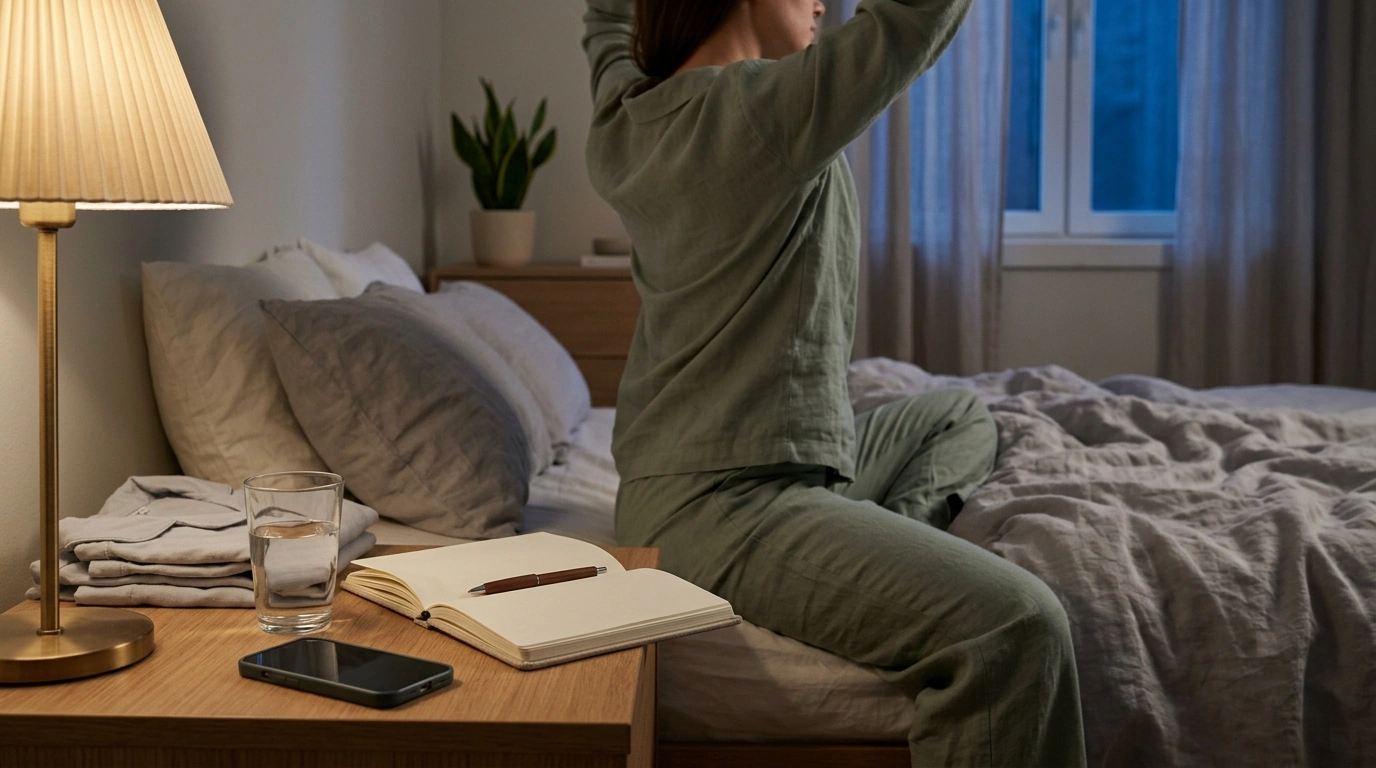
- 90–60 minutes before bed: dim lights, stop heavy work, and choose a low-stimulation activity (paper book, calm music, light tidying).
- 30–20 minutes before bed: tidy the sleep space, set devices to night mode (or place them out of reach), and queue a calming soundscape if it helps.
- 10 minutes before bed: choose one relaxation method and commit—switching techniques repeatedly can keep the brain in evaluation mode.
- If sleep doesn’t come: use a non-frustration rule. Get up briefly for a quiet activity in low light, then return when you feel sleepy again.
For a deeper, structured approach to personalizing your routine day by day, Sleep Smarter with AI – Bedtime Routine Guide for Better Rest can help you refine timing, wind-down options, and “fallback” plans for busy weeks.
Relaxation Techniques That Pair Well With Dream Recall
Dream recall improves when sleep is supported and wake-ups are handled gently. These techniques can help you downshift at night while keeping your mornings clearer:
For additional fundamentals on healthy sleep habits, the American Academy of Sleep Medicine’s overview of sleep hygiene is a helpful reference.
Lucid Dreaming, Gently: Safer Ways to Explore
If you’re regularly sleep-deprived or dealing with persistent insomnia, it can help to revisit basics from sources like the National Heart, Lung, and Blood Institute’s guide to healthy sleep before adding dream-focused practices.
Choose Your Path: Quick Checklist Options by Goal
| Goal | Best checklist focus | Time needed | Avoid if… |
|---|---|---|---|
| Fall asleep faster | Dim lights + breath pacing + phone off | 10–20 min | Overly strict timing increases anxiety |
| Stay asleep | Cool room + noise control + low-stimulation wind-down | 15–30 min | Alcohol used as a sleep aid |
| Remember dreams | Intention + no phone on wake + quick notes | 5–10 min (AM) | Rushing mornings without 2 minutes to jot fragments |
| Lucid dreaming | Recall + daytime reality checks + gentle cue | 5–15 min/day | High stress, insomnia flare-ups, or feeling sleep-deprived |
Making AI Suggestions Useful Without Making Bedtime Complicated
Who This Digital Guide Helps Most
Get the Checklist and Build a Personal Sleep Adventure Routine
Use the checklist like a nightly menu: pick one environment step, one relaxation step, and (optionally) one dream step. Start small for seven nights before adding lucid dreaming elements. When you’re ready for more personalization, pair the checklist with a dedicated routine resource like Sleep Smarter with AI – Bedtime Routine Guide for Better Rest to keep your system consistent—even when life isn’t.
FAQ
Does lucid dreaming harm sleep quality?
Gentle, low-arousal techniques can coexist with good sleep when you prioritize enough sleep time and keep bedtime calm. Sleep deprivation, intense methods, or pushing techniques during insomnia flare-ups can hurt sleep quality, so it’s best to back off and focus on recovery on tough nights.
What if the checklist makes bedtime feel like a task list?
Use the smallest version (2–3 items), and choose steps that feel rewarding rather than strict. Rotate only one element at a time so the routine stays familiar while still feeling fresh.
How long does it take to remember dreams more often?
Many people notice improvement within 1–2 weeks with consistent wake times, a no-phone moment upon waking, and quick note-taking of fragments. Even a few keywords captured immediately can build recall over time.









Leave a comment